


“Athens, Santorini, and…? Mykonos? Crete?”
My husband and I were deciding where we’d stop last on our trip to Greece back in 2018. I’d always dreamed of visiting Santorini, and he desperately wanted to explore the history of Athens, so those two stops were no-brainers. We had enough time to add one more island to our itinerary, and we were split: Mykonos leaned too into the party scene that we weren’t looking for, and Crete felt too large to explore in just a few days.
I texted a friend who’d been the year before, and she encouraged us to visit Naxos. I’d never heard of Naxos, but quickly learned it was ideal for a few days, had excellent food (my friend raved about the potatoes, specifically), and was more laidback than neighboring Mykonos.
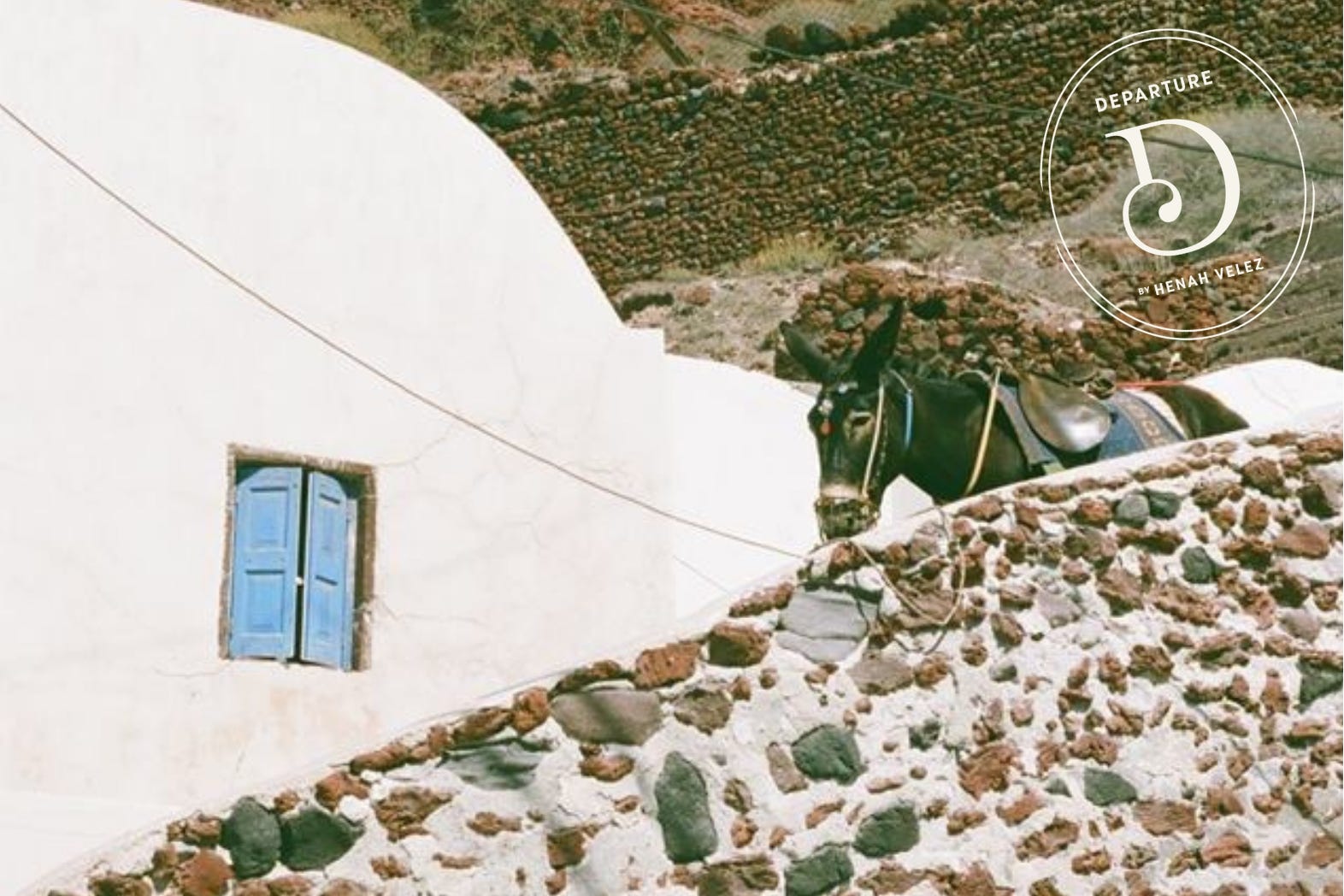
In the end, Naxos was far more memorable than we’d hoped, becoming a recommendation I passed on to others. (Santorini, longtime readers may recall, ended up being a disaster, thanks to a Mediterranean hurricane.) The potatoes were, in fact, delicious; we rented a car and drove around the island, including a stop at an olive oil museum; it was casual yet still dotted by beautiful beaches and whitewashed villas.
Nearly nine years later, Naxos ranks highly on most travelers’ lists, with press from Condé Nast Traveler and World Tourism Market. I take very little credit on being ahead of the curve; that’s all thanks to my dear friend. But it reminded me of all the times I decided to try somewhere new in addition to the destinations I’d dreamed of, like when we paired Bora Bora with Moorea, on the advice of another friend, and Moorea ended up being the island I still think about daily.
How can we better balance the tourist hot spots with places that are more “up and coming”? Where do we even find these places that might want visitors but aren’t yet on our radars? And how do we visit them responsibly, without contributing to over-tourism if we can avoid it? I went to the experts to find out.

Several weeks ago, I teased I was in New York City for a very special reason, and now I can finally share: It was to preview Intrepid Travel’s “2027 Not Hot List,” its annual list of “10 lesser-known destinations that are ready for—and deserving of—more visitors, where tourism can create meaningful change for local communities,” culled down from a shortlist of 20 or so destinations.
The full list ranges from Alonnisos, Greece (a quieter corner of the Aegean compared to Naxos nowadays) to the Pekoe Trail in Sri Lanka to the Northern Highlands of Jordan, expanding beyond Petra and the Wadi Rum.
While I was curious about the ten destinations Intrepid chose, I was actually more interested in understanding the team’s methodology: How do you narrow down all the places in the world to one list—and crucially—how do you do it in a way that’s responsibly supporting local economies and cultures, and won’t inadvertently lead to over-tourism elsewhere?
According to Mikey Sadowski, the VP of Global Communications at Intrepid, there are three key criteria his team looks for: Less-visited, tourism readiness, and “new in 2027,” with the process beginning years in advance—they’re already plotting for 2028. Their focus, according to Mikey, is to “help redistribute the demand towards destinations that are being overlooked, but that have the capacity and the desire to welcome more visitors.” This means local people having agency over the destination, having enough infrastructure to benefit from increased visitation rather than overwhelmed by it, and focusing on alternatives to redistribute that demand versus just offering alternatives.
The example he gave was fitting, as it mimicked my own honeymoon experience to Kenya: “The Samburu National Reserve [at the top of the Not Hot List] is one of our destinations, but even the trip that Intrepid has going there, it still goes to the Maasai Mara for a night—except it spends two or three nights in Samburu. Our normal safaris are four nights in Maasai Mara. We’re understanding and acknowledging the commercial realities, consumer demands, and travel demand—we’re not saying, ‘OK, no one wants to go to the Maasai Mara anymore.’ It’s that, instead of contributing to a mass influx of people for an extended stay, we can at least get people to see Samburu, too, and that oftentimes becomes the most memorable part of their trip.”
So it isn’t about avoiding the Parises and Tokyos of the world entirely—their recommendation is to maybe add another under-the-radar place along the way, to “redistribute” the weight of tourism more evenly. Annie Combs, founder and CEO of ECPC Travel and a regenerative tourism expert, echos that this dispersion of traffic is worthwhile and is just one of several methods you can explore. She also recommends personally researching providers in the area to understand the direct local benefits, opting for a slightly different route (she gave “Secret Tours of Prague” as an example, a historical walking tour operator who goes for a more local approach), and visiting a place in the off-season or slow season.
Neil Brinckerhoff, Director of Marketing and Sustainability at CAS Trips and a former interviewee of Departure, shared that he stands by Intrepid’s approach, “Intrepid is an industry leader in making a statement about how travel can do good, but they still need to sell trips to make that impact. This campaign also helps build the infrastructure for more operators to work in these destinations, laying the groundwork for them to flourish. So as an individual tourist, I would feel good traveling to one of these destinations with Intrepid—or likely there alone as well, knowing tour operators are confident in the existing tourist infrastructure.”
But how do you know who’s truly ready? When a tourism board’s primary motivator is to entice you to visit, the motives can be at odds with what’s appropriate for a destination’s infrastructure or economy.
In addition to looking at the tourism data to identify opportunities, Sadowski says tourism boards play a role in the process, but they’re more of a “consulting advisory stakeholder,” rather than the local voices they lean on. Annie agreed, saying the motivations might not be 100 percent authentic to the experience.
Intrepid, Mikey says, has thousands of team members across 100 countries in six continents and over 85% of our supply chain is locally owned, with constant conversations happening on the ground. He adds, “That local expertise determines whether a destination is ready, relevant, and aligned with the spirit of the Not Hot List. A destination cannot be truly ready without local support for tourism […] that tourism needs to create benefits for host communities, and the perspectives of the people who call these places ‘home’ becomes fundamental to the process.”
For example, Siwa Oasis in Egypt began floating around earlier this year, clearly checking two of the three boxes of criteria, but it became clear that the ecosystem around tourism was still a bit too fragile for the local culture. The Intrepid team dove into articles interpreted from Arabic that suggested growth might be outpacing the infrastructure, and that hesitancy meant it might not be time just yet to include in a Not Hot list. That’s not to say it wouldn’t be worth visiting, of course, or that other tour operators may not include them—but Intrepid’s commitment to thoroughly vetting and responsibly suggesting a destination really stood out to me.
Because adding any destination to an “up and coming” list also means inherently risking over-exposing a place or ultimately having a less-than-stellar experience. Kyrgyzstan, for example, was featured on a previous Not Hot List, and went on to be part of the New York Times 52 Places to Go and Intrepid bookings increased 60%. But Annie pointed out that most of the content out there made the country look “super developed and touristy,” so there’s sometimes a mismatch of expectations as visitors arrive.
She adds, “A lot of these businesses are getting horrible reviews, and it’s not their fault that the roads might still have potholes or that the solar-powered lodge doesn’t have enough hot water […] you have to remember, if you’re visiting an emerging destination, it means that the destination hasn’t had decades of experience with massive hordes of tourists. So I always say ‘pack your patience’ if you’re going somewhere new.”
In most cases where I went off the beaten path (while pairing with an existing hot spot), I found this to be true with the neighboring area, or that the infrastructure was struggling a bit against tourist demands. As Annie said to me, “You weren’t supposed to know. That’s the point. You see the pretty hotel and you click ‘book’ and that’s the end of it.” In order to align those expectations a bit better, following Annie’s advice, it’s probably best to check recent unfiltered reviews, looking at trips taken within the last year, and asking operators directly about infrastructure. And to be clear, the responsibility isn’t only on travelers to ask the right questions—operators and media (myself included!) covering these destinations play a role in setting realistic expectations, too.
On the other end of the spectrum are places that might have been listed as “up and coming” a decade ago, but are dealing with droves of tourists now—Neil points to UNESCO heritage sites, which were literally named to protect them: “Unfortunately, there are plenty of examples of sites fighting to be removed from the list, because of the impacts the attention has brought to them.” This is where Annie’s advice around traveling in off-seasons is critical, particularly if a destination is at the top of your list but at risk of over-tourism.
So, how do we identify destinations striking the balance? I recommend following local guides (many of them do have social media) versus travel influencers, asking your most well-traveled friends which places they loved outside of the major hot spots, or looking to companies like Intrepid or smaller regional boards that are running these methodologies as ethically as possible.
Additionally, as individual travelers, Annie suggests asking these kinds of inquiries to the future places and spaces you want to book:
How is this area or operator estimating resource strain (ensuring they have the proper infrastructure for waste or water, for example)?
Asking a hotel concierge about the local establishments they recommend to support the local economy (i.e., mom-and-pop restaurants, small businesses and boutiques)
Going beyond sustainability labels and keeping your eyes peeled for actual numbers and data around their footprint: “It’s very hard to fudge a number and not get caught.”
In the simplest terms, when someone wants to know what to ask for, Annie says, “Pick your favorite question and ask it.” For example, if you’re obsessed with solar panels, you can Google “hotels with solar panels in Albania” and you’re guaranteed to find one. She sums it up by saying, “If you have a question, people like it when you call and ask them, because it means you’re interested in their business and what they do. So don’t be afraid to reach out.”
Just as I believe there are definitely wrong ways to travel, I think there are plenty of right ways to explore the world, too: Looking beyond trends, being open to experiences you might not have expected (like adding said-stop near a major city), and asking the nuanced questions. Visiting an under-the-radar destination may be both a gamble and a payoff, but if approached thoughtfully, I think it will be worth it for both you and the communities you’re visiting.
🏰 Speaking of less-obvious destinations, Monica Mendal shared five European cities to visit beyond the usual suspects (that are largely tourism-ready). If you’re planning any European excursion this fall, consider this list.
📸 If you want the slow travel feel of a film camera, without dealing with actual film, this screen-free camera is a delight. Vintage-inspired, vibey, and a great value, especially as a gift. (HENAH7 gets you 7% off.)
👻 To get you into the spooky spirit, Riley Sager’s latest release, The Unknown, is a classic thriller with plenty of twists and turns. I imagined one of the main characters as Meryl Streep and couldn’t unsee it. Here’s the two sentence plot: “In 1926, five women disappeared from a remote island in Vermont. Now, one hundred years later, it’s happening again.”
📚 A fun quiz to test your knowledge about locations all around New York City and how they’ve inspired writers over the years. (NYT)
🛫 And finally:
See you next week (with an exciting re-share coming this weekend!) —Henah x
Our day in nearby Haarlem while visiting Amsterdam was the highlight of our trip to The Netherlands, so much so that when we go back we plan to stay there, instead.
Great post! As full time travelers, we are always concerned about finding travel experiences that add as much to the local people and environment as the experiences give to us. And as bloggers we’ve stopped sharing stories and guides about places that we feel are already too covered. We instead prefer to share our thoughts and experiences about places that are actively looking for more visitors. Finding alternatives isn’t always easy, and yet it’s also part of the adventure.