


A road trip through the south of Spain, surrounded by white-washed walls and a mesmerizing blend of Moorish and Mediterranean styles. A winding loop around the island of Moorea, a calming view of lush green palm trees on one side, the picturesque ocean on the other. Crossing the border between Croatia and Bosnia, stopping at a local restaurant for lunch while overlooking the Adriatic Sea coastline.
Over the years, I’ve rented a car across three continents, and (so far) have lived to tell the tale. It’s not always my ideal mode of transportation—I love a snail’s pace stroll through town or learning about a city’s public transit system. But when we’re spending extended time in one place, a car offers us the chance to expand our time away and soak in the entirety of a region.
With bookings across 10 countries, today I’m sharing the Do’s and Don’ts of renting a car. I think there’s generally a lot of hesitation and fear around booking a rental car in another country, understandably. And while I’m sure many of you have already rented a car outside of your home country, my hope is to empower you with the knowledge to feel confident booking and to shine a light on some of the lesser-known rules and tips to make the experience as smooth as possible. (As always, if you have additional ideas—or stories—to share, please do so in the comments!)

The limited time offer for $35 annual memberships ends August 31st and won’t return until the end of the year. Sign up now to support independent travel writing, receive access to the backend (100+ features), and to enter giveaways.
Do: Rent the smallest car you need.
During our aforementioned travels from Madrid to Sevilla, with stops along the way in Granada, Cordoba, Malaga, and Marbella, my husband and I rented a car online ahead of time. Upon arriving at the agency, we were told their sedans weren’t available and we’d have to make do with a larger SUV.
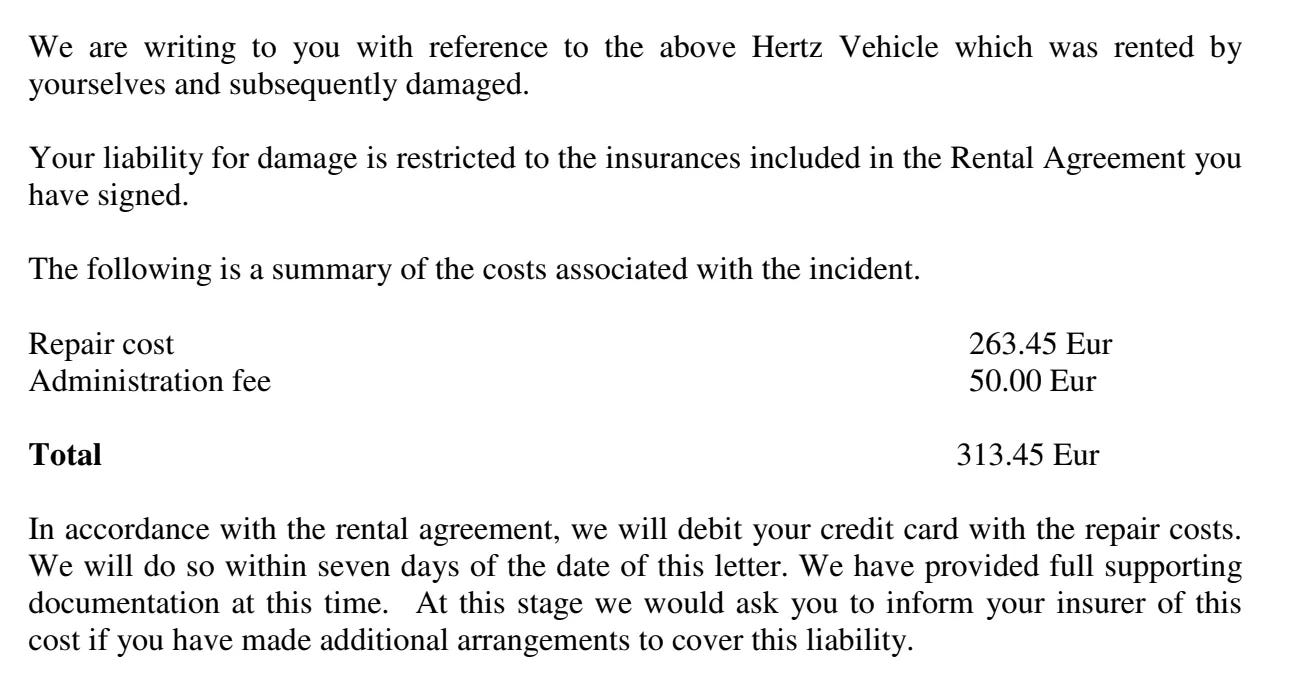
We made it work, but it was also impossibly hard to park at times. One afternoon while we were heading to dinner, we needed to park inside a covered deck. The spots were so tiny that I ended up scraping one corner of the car, a moment my husband still loves to remind me about. At the time, I knew it wasn’t ideal, but the $350 bill that came later was a bit of a shock. For a tiny scrape?! (I’ll share how I actually managed to avoid paying anything in a second.)
In the south of France, too, just a few weeks ago, the streets and spots were equally narrow. We had an SUV because we knew we’d be carrying our luggage and friends—but in retrospect, I probably would’ve gotten a car two sizes down. (Does it work that way, like t-shirts?) So the TL;DR here: Get the smallest car you need and pray it’s there when you arrive.
Do: Understand your credit card benefits—because it could cover you.
I know, I know—I’m a broken record, and plenty of you might already know this. But! A premium credit card like the Chase Sapphire Reserve or the Capital One Venture X sometimes includes primary rental car insurance, which could cover any potential damage. (American Express Platinum provides secondary coverage, but you could also purchase a low-cost policy through them.)
You absolutely need to read the fine print (for example, in the case with the CSR, cars older than 10 years old, “expensive” vehicles, and motorcycles aren’t covered) and some countries aren’t included. Plus, the insurance typically only covers damage or theft to the rental car itself, not damage to other people’s cars or injuries. It’s not the same as liability insurance, and the terms can change at any time.
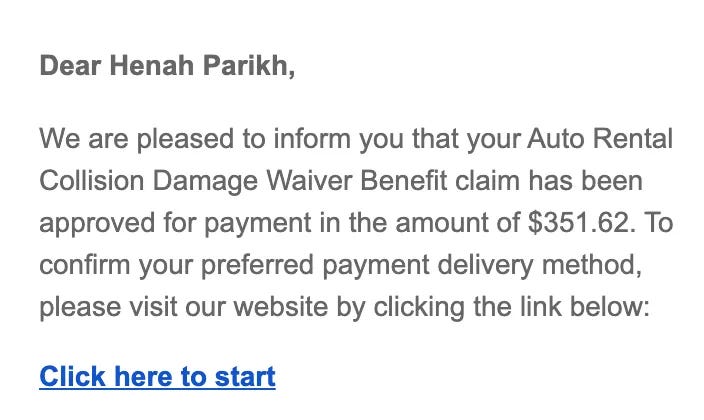
In the case that the insurance essentially covers what you need: All you would do is pay for the entire rental with your premium card, and, most importantly, decline the rental company’s “collision damage waiver” (CDW) once you arrive at the check-in desk. This is what I did for our time in Spain, and once I received the itemized bill for damages from the rental car company, I opened a claim with Chase, and they reimbursed me for the entire bill.
Do: Read up on parking before you go.
If the native language isn’t your own wherever you go, it’s easy to get confused by road signs and placards. Luckily, there are universal icons that can help (this is a handy primer!), but I’ve seen some where I have no clue what they’re trying to communicate.
In one such instance, my best friend and I were in Croatia, parking in Dubrovnik for a quick meal before heading back to our Airbnb. Unfortunately, we had inadvertently ended up in a “Restricted Traffic Zone” (RTZ), meaning only authorized vehicles could enter and park there. The goal of a RTZ is to minimize traffic and pollution, and you’ll often find these in older cities across Europe—they’re sometimes called ZTLs/LTZs or Limited Traffic Zones.
We weren’t familiar with the signage (it turns out you’re looking for a white circle with a red border, like this), and when we went to return the car a week later, we were slapped with a fee equivalent to $800 USD. Ever the goody two shoes, I insisted on paying it while my best friend—whose name the reservation was under—said absolutely not. To this day, she hasn’t paid, so if she ever returns to Croatia, jury’s out to see what will happen if she wants to rent another car. 🤣
Do: Get an International Driving Permit, if you’re leaving the US.
Plenty of folks don’t bother, but for me, an International Driving Permit (IDP) is worth the $20 for the peace of mind. This allows you to legally drive in another country alongside your US license, and if you’re ever pulled over or in an accident, you’d have to show your IDP. While in Naxos, Greece, I was required to show them my documentation before loaning us a car for the day, so some agencies do ask.
Unfortunately, IDPs are annoying to get: They’re only available through two organizations officially authorized by the Department of State, the AAA and the AATA, they’re only valid for one year, and can’t be renewed. (“USA! USA!” The crowd chants.)
The good news is, you can swing over to your nearest AAA if you’re in the US, pay $20 for the permit, an additional couple bucks for them to take your photo if you don’t already have a passport-sized one to include, and be on your way within 20 minutes. You can also apply by mail if you’re not close to a local AAA.
The IDP is valid in 150 countries, but there are certain countries that do not honor them—like Brazil. Strangely, they always ask you to name the main country you’re driving in, but rest assured that you should be covered across them all.
Do: Review road rules and tolls.
Some countries are notorious for sending you a speeding ticket months after you return home. There are no cops pulling you over, no speed traps you can visibly see, just a camera that captures you going over the speed limit. My friend once received an auto-ticket for going 5kmh over in Switzerland, and Australia is extremely strict about driving rules. Italy, for example, can send you a ticket up to an entire year after your visit, and they’ll bill your rental agency—who will, in turn, send you a notice, or worse, automatically charge you.
I’ve read horror stories of some folks coming home to multiple tickets totaling thousands of dollars or having to pay collections, and it just isn’t worth getting somewhere two minutes faster to shave off time. For that reason, despite how other cars love to zoom on the roads, I always aim to stay at or under the speed limit.
Separately, it’s best to be familiar with toll roads before you’re stuck in line, frantically wondering if your credit card will suffice when the sign clearly says cash and coins only. I’m not speaking from experience or anything…
Don’t: Skip taking photos and videos of your rental before you drive off the lot.
As my coworkers like to joke, I love having receipts. I never want to be blamed for damage that wasn’t my own, or for an agency to assume a scuff mark is an actual scratch.
Before I even open the car door, I take two minutes to record the car up-close from every angle: the exterior, especially the top of the car which is easy to miss, near the tires (look for signs of under-inflation or extreme wear, and check both the hubcaps and wheels), all corners, and the interior. I snap a photograph of the odometer to ensure it lines up with the paperwork I sign, too.
Speaking of paperwork, take a photo of that bad boy, too: The damage diagram, receipts, the rental agreement you signed. While you’re at it, screenshot your rental confirmation when you have service. Save yourself the stress later, even if it means delaying the start of your trip by a few minutes.

Don’t: Accept a car, agency, or price as the best one, without researching.
Before you even choose a company to go with—Hertz, Avis, Budget, and so on—research the local branches you’ll be picking up your car from. Just because you had a positive experience with one branch, or because the brand is highly respected in your area, doesn’t mean that’ll be the case everywhere. Ask me how I know this one! Keep an eye out for patterns across reviews or if you Google it separately, like “[company] damage charges.”
If you’re heading to Europe, refer to an aggregator like AutoEurope.com that compares different prices for various models and agencies. I also like using AutoSlash to find deals—you’ll input your credit cards, associations with places like Costco or AAA, etc. and it’ll send you prices lower than you’ll find elsewhere.
If you have a premium card—and even sometimes with airline cards—some rental car brands will automatically give you a higher status or lower price. Here’s a helpful list from NerdWallet. Some loyalty programs or associations might even gift you a free additional driver, which otherwise could cost you $25/day or more.
Finally, look at the total price and compare—a $200 rental might sound cheap, but it might be for a manual stick-shift you don’t know how to use. Or, you might forget to include additional drivers or cancellation terms or to request unlimited mileage. Now you’re looking at $500. Think through the reservation as comprehensively as you can: insurance if you don’t have a premium card, mileage limitations, taxes, airport or one-way fees, cross-border fees, toll devices, etc.
Don’t: Assume you can take the car across borders.
Remember our pitstop in Bosnia for lunch? Not every rental company allows crossing borders like this—so if you’re traveling a longer distance, be sure that your rental agreement explicitly states that you’re good. (And, maybe additionally, confirm that your rental insurance coverage also applies there.)
Don’t: Assume your rental has the same equipment you’re used to.
I drive an old school 2012 Honda Civic at home, so every time I’m in a new car with cameras (basically in the lap of luxury) or an SUV double the size, the adjustment period always runs a few hours. And if you’re driving on the opposite side of the road than you’re used to, do a few practice laps around the lot.
Beyond that, you might want to double check that your car has all the safety equipment you need (or consider packing them for yourself): a spare tire, windshield scraper, child seat. I like to bring along a charging cord to power up my phone (and for CarPlay) in case of any issues.
As a teenager, my mom always impressed upon us the importance of a blanket, water, and snacks in cold weather, in case we ever got stranded—I’d echo the same here if you’re traveling in colder climates.
Plus, some countries require specific safety equipment in your rental. Ultimately, it’s always better to be safe and prepared.
If I’m being honest, there are probably a dozen more trips I could give you: Don’t fall for the “prepaid tank” trap, confirm your route ahead of time to make sure the roads are actually open, download your maps offline in case you lose signal, and save the roadside assistance number when you pick up the car. But I also know at some point your eyes will glaze over, if they haven’t already.
If you read nothing else, just remember this: The most expensive mistakes around rental cars happen before you even get in the car, so please do your own due diligence. It will be worth it.
Hopefully, these tips help make your next journey a little smoother on the road, so you can explore and enjoy without worrying about damages, injuries, or fees. Happy road tripping! 🚗
📖 Earlier this year, I recommended Ann Patchett’s Whistler as one of my favorite books of 2026. This hilarious piece from Lost in the Marginalia about a book club meeting that almost broke out in a fight while discussing Whistler made me laugh out loud. Have I convinced you to read it yet?
🛫 Yes, flights are the most expensive they’ve been in years. But there are still cheap fares available, especially if you live near one of these hubs, according to Going. Sadly, Atlanta did not make the list—but my other hometown airports (JFK/EWR) did for international deals.
👀 Relatedly, one of my favorite travel newsletters, Smart Points, reshared the advice I consistently have for Delta fans: You’re better off booking through Flying Blue for way fewer points.
🙏 Now sourcing recommendations for: off-the-beaten path recommendations for Charlotte, NC (in tandem with our past guide from Kylah!); the best broadway shows for the end of the year in New York City (I’ve seen pretty much all the staple ones!); fall sights to see in Blue Ridge, GA. Tell me your suggestions!
See you next week. —Henah x
I’d like to add that I love booking my domestic rental cars using generous cash back services like Rakuten and personal credit card offers. My friend got a $7000 accident bill completely covered for a rental car she booked using a credit card.
A lot of the things you mention are exactly why we started thinking about car rental differently. When you travel, the last thing you want is to spend half your first day reading insurance terms or worrying about whether your car you booked will actually be there. Great job on the article! 🙌 bravo